Showing posts with label Race. Show all posts

Saturday, October 13, 2012

Movie Trailer: Ken Burns' The Central Park Five

In 1989, five black and Latino teenagers from Harlem were arrested and later convicted of raping a white woman in New York City’s Central Park. They spent between 6 and 13 years in prison before a serial rapist confessed that he alone had committed the crime, leading to their convictions being overturned.
Set against a backdrop of a decaying city beset by violence and racial tension, The Central Park Five will tell the story of that horrific crime, the rush to judgment by the police, a media clamoring for sensational stories and an outraged public, and the five lives upended by this miscarriage of justice. - Florentine Films

Wednesday, July 4, 2012

The City Of Chino, California Vs. @NatesVlogs


I'm a huge fan of NatesVlogs.  I find his videos hilarious.  If they pop up in any of my feeds I'm usually in front of my computer and watching it within 10 minutes.  I have literally never watched a video of his without laughing out loud.  The same goes for his latest uploads. 

Sadly, the topic is neither funny or cool, but leave it to Nate to make light of a bad situation.  Whether you're Black or brown "fitting the description" is a real problem even on the 4th of July.


Sunday, June 24, 2012

The Wire's David Simon On The Drug War, New Fans & Brackets


There's good news and there's bad news.  The bad news is that the interview is conducted by Jason Whitlock, who's a jerk ninety percent of the time he opens his mouth.  The good news is that the interview was still great and informative.  They hit on a lot of great topics:

Friday, June 15, 2012

Jay Smooth With A Few More Thoughts On The N Word

Sunday, May 27, 2012

Jay Smooth - Don't Freak Out About the White Babies

Jay Smooth helps America adjust to the news that for the first time in history, a majority of American babies born in the last year were "minorities".

Tuesday, May 1, 2012

Jay Smooth on the Trayvon Martin Case

His silence was deafening at the height of the Trayvon Martin coverage, but the voice I respect most has finally given his thoughts on the tragedy.


Friday, December 23, 2011

Friday, November 4, 2011

Just Listen: WTF with Marc Maron Featuring Chris Rock


Rock hits on a ton of great topics with Maron:
  • How he was almost a rapper . . .
  • His relationship with Eddie Murphy.
  • Saturday Night Live's treatment of Black performers.
  • Why Dave Chappelle is America's the last great comedian.
  • Why cable television killed the well-rounded comic.
  • How he prepares for his hour specials & tours.
  • His theory on Barack Obama's first term.

Thursday, July 28, 2011

I Wish The News Covered MY Pittsburgh

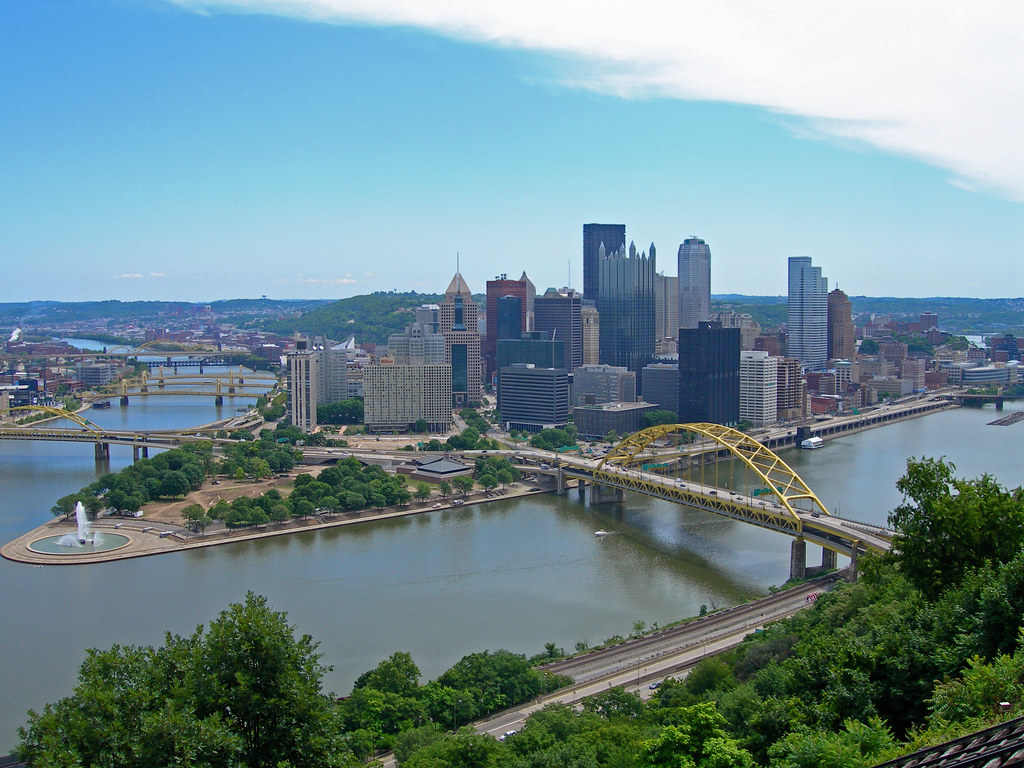
It's funny, I used to often talk to friends that aren't from this area about my city and my less than positive opinion of it.  Most of those I talk to a pretty smart and know there way around the internet.  I would tell them about how much I dislike my city and why, while they would see different articles online about how livable or affordable it is.  I would always tell them that its great if you're white, but as a Black person . . . not so much.  The images of Pittsburgh and Pittsburghers are pretty much whitewashed on a nationally.  The successful Blacks in the city are primarily athletes that play for local teams (read: STEELERS) and are just passing through.


Friday, April 1, 2011

The Whitewashing Of Mixed (Black) Women In Hollywood

I must confess that it's something that has always irked me to a degree.  I've discussed this in the past in regards to Maya Rudolph and her movie, Away We Go.  Lately, we seem to routinely be given the pairing of a white man with a racially ambiguous woman with no family of her own or friends that aren't white.  Recently I went to the movies and was once again slapped in the face with this recurring theme when I saw the poster for her latest project, Bridesmaids.  As dismayed as I was and currently am my feelings for Maya haven't changed from my original blog entry.  So, due to my feelings for her and the fact that the trailer is hilarious, I will more than likely be at my local theater dealing with my ambivalence as best I can.

The inspiration for this entry came from an article on Rashida Jones "passing" through Hollywood.  In the piece the writer cites a quote from Ms. Jones in Racialicious:

Saturday, February 26, 2011

Revisiting The Scene Of A Crime

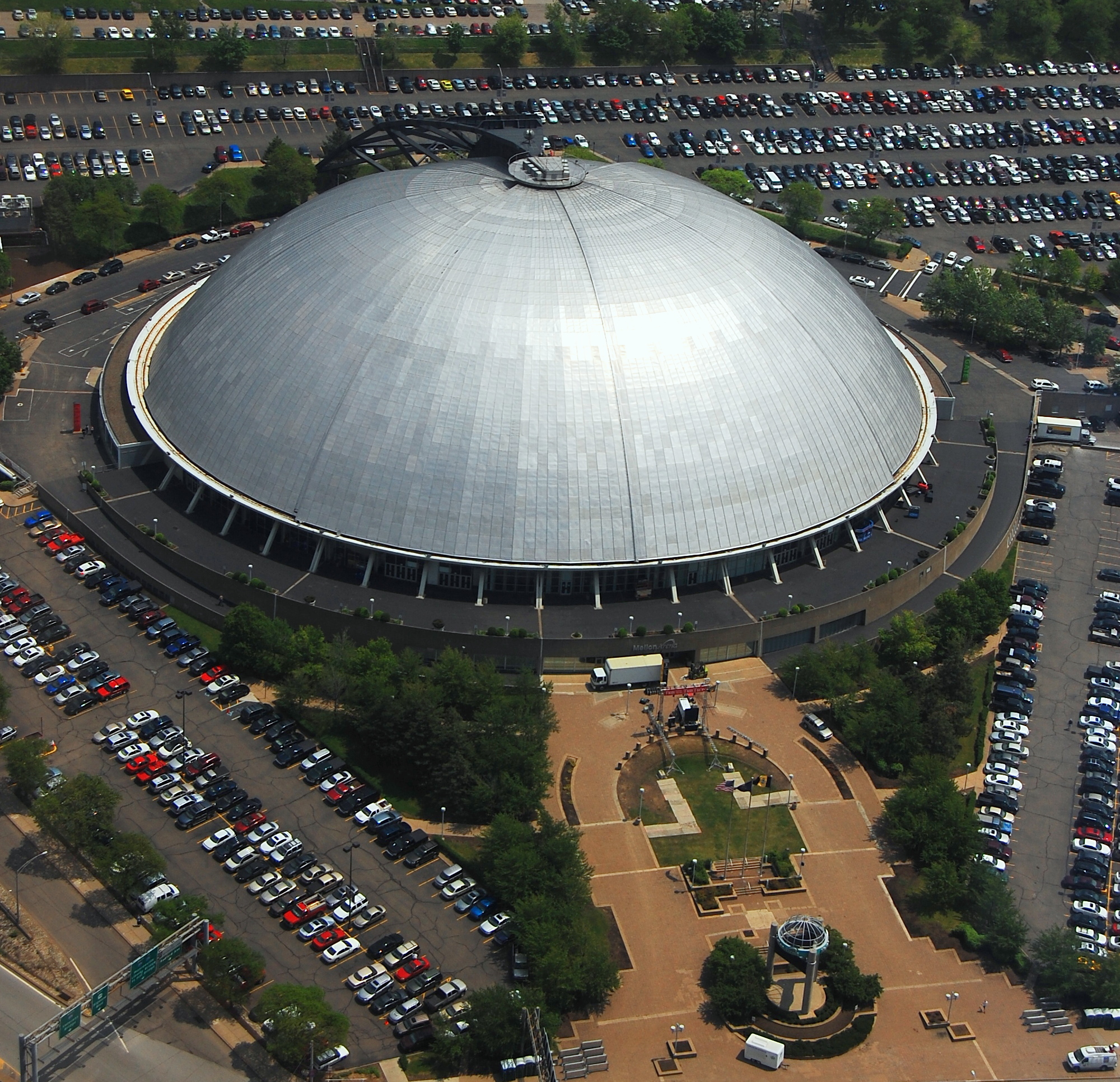
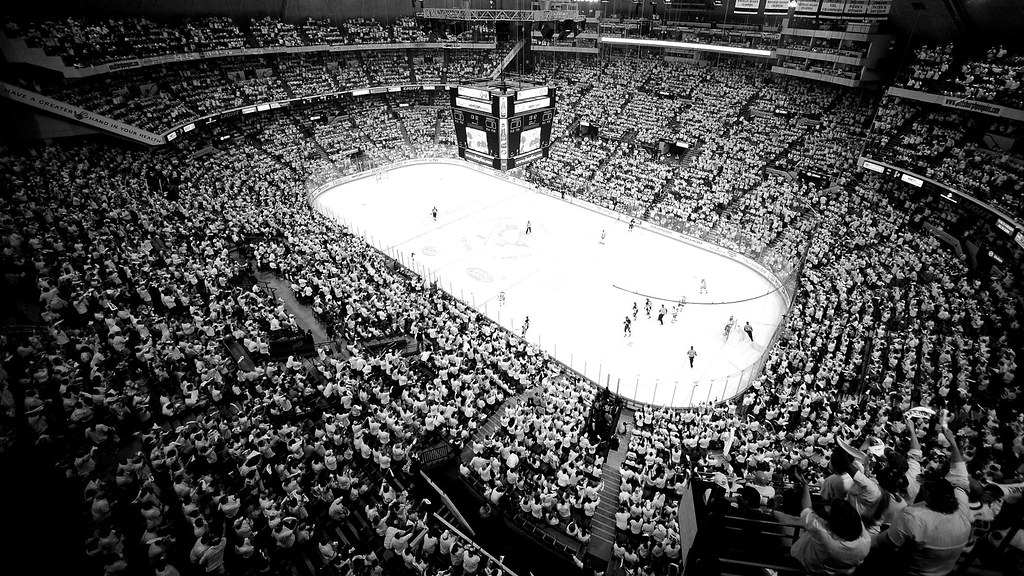
Civic Arena: crime scene

But don’t wipe away the evidence; build something special

By David Conrad

Post-Gazette columnist Brian O’Neill finally said out loud what everyone knows is true (“Point of Realism Interferes with Preserving Arena,” Feb. 8): Whatever replaces the Civic Arena, in the end, must serve the needs and growth of the Hill District as much as it serves the Penguins’ bottom line.


A wound needs to be healed. A wrong needs to be righted. Seems like a no-brainer. But it’s not so easy.

The Penguins have legal development rights to the property. They can do almost whatever they want with it. They should not. They should show enormous forbearance, unprecedented in the history of corporate America, and agree to a cooperative master plan. One that still makes them money, but one in which they let other architects, the Hill community and local leaders have actual design power.

Yes, I am saying that a company with the legal right to develop property should relinquish substantial control. Call me a socialist, or a libertarian, or a whatever.

The Civic Arena was built by legal means. The group that tore down the Lower Hill was legally entitled to do so. The development was called a triumph. But it was a crime.

Big news: Just because something’s legal doesn’t mean it’s right. Just because you have legal rights to something doesn’t always mean you have no one to answer to when you want to chuck it. Especially when that something is a monument.

Yes, the arena is an important symbol, an historically crucial object. Because it’s a modernist masterpiece? I’m no architect, but I’d have to say, “No.”


It’s important because it’s evidence in a crime scene. It’s a weapon left on a battlefield. And this sword should be made into a plough share.

We should never forget what happened on those 28 acres. A strong, nationally known working-class neighborhood was wiped away. A neighborhood that gave Pittsburgh and America a symphony of cultural giants — musicians, actors, merchants, sports heroes and civic leaders — was chopped off at the knees.

The Hill gave generations of immigrants a foothold in this country, it gave them their first home and it gave them a voice — quite literally with the Pittsburgh Courier, which was to the African-American population The New York Times of its day.

The Hill. August Wilson’s crucible for the greatest play cycle in American literature. The home of the Crawfords, the fiercest baseball team that ever graced a diamond.

Pittsburgh’s Hill District. In a city whose racism went quietly unpublished but which could be as brutal as Selma’s, the Hill was a beacon to black communities nationwide. And then it was a parking lot. And a place to see the Beach Boys.

As they say in the vernacular, we gotta own that.

Building another Waterfront or South Side Works, surrounded by parking lots that block off the Hill, again, is not gonna do that.

Building “safe” evening entertainment for suburban sports fans is not gonna do that.

What greater Pittsburgh, as a whole, needs to own up to and answer to is our responsibility for the future of the Hill.

The Lower Hill development will for better or worse remake the face of the city for the next 50 years. There’s no larger, more central piece of property left to dream on. And that’s what should happen. What is built there shouldn’t just make a dime, it should make everyone, black and white, drop their jaws.

Pittsburgh, hard-bitten and practical though it seems, is a magical place. It’s weird and warped and beautiful and it makes you want to fight for it. The number of men I’ve seen cry openly as they told me how they wished they could move back here I can’t count.

Right now, we’re just starting to stanch the population loss, we’re getting people to love it here, we’re riding a national obsession with “authenticity,” we’re the heart of Steeler Nation, we keep getting called the “most livable city,” and we might be the only place in America were Republicans and Democrats could actually find some middle ground.

The city’s at a turning point. Pittsburgh’s poised to make it. And we are about to run smack into the greatest financial crisis in the city’s history. What to do?

Break the law. Yes, you heard me. Declare, as a group, that “we” the people of Pittsburgh “own” what happens here.

I’m not saying storm the offices of Oxford Development Company and the Penguins, but ask for a smarter plan. Ask that your leaders, your politicians, your sports heroes and your foundations stop shrugging their shoulders. It’s not so simple as “it’s up to the Pens” or “we just gotta get something built.”

No. That thinking gave us two empty department stores, 400 lofts no one lives in and a subway to nowhere. We’re better than that.

Make them step up. Three major foundations bought the site of the former Hazelwood coke plant to avoid exactly what’s being designed for the Hill — a soft outdoor mall town that would be the modern equivalent of what the arena was 50 years ago: a crime.

Why doesn’t the Hill get the same equity? The same skin in the game?

Pittsburgh and the Hill deserve a better shake. A deeper process. One that, in the end, will create something that not only makes everyone involved more money than a series of movie theaters and cheesecake factories walled in by parking garages but that also will be a thing of beauty and strength that ties the Hill back into the life of the city it was meant to be a part of. A thing that people all over the country will travel to see.

If getting a court injunction to save some of the Civic Arena serves that purpose by starting the process, then I’m all for it.

I’m not saying the Penguins could never build something great on their own. I’m just saying they probably won’t and, in some sense, it isn’t their responsibility. It’s ours.

They aren’t tearing down the arena for the benefit of the Hill; they’re tearing it down to make money, which is their job — aside from winning hockey games.

In most situations, I’d say, go to it. If the Hill District Community Development Corp. owned the arena and wanted to tear it down, I’d say, it’s all yours.

But who wins when you cut off your nose to spite your face? What monument does vengeance leave for our children to play in?

The circumstances are strange here.

In Pittsburgh? Go figure.

David Conrad, an actor who starred in the CBS television series “Ghost Whisperer,” grew up in Swissvale and now lives in Braddock.

*First photo courtesy of Scott Michaels
**Third photo courtesy of Kyle Kebert
***This was an opinion column that ran in the Pittsburgh Post-Gazette.

Wednesday, February 23, 2011

IFC Sits Down With "Night Catches Us" Director Tanya Hamilton

A Spirited Q & A With "Night Catches Us" Director Tanya Hamilton

The Best First Feature nominee on capturing the revolution of the Black Power movement in a quiet way.

by Stephen Saito


As a way of celebrating this year's nominees for the Spirit Awards in the weeks leading up to the ceremony, we reached out to as many as we could in an effort to better understand what went into their films, what they've gotten out of the experience, and where they've found their inspiration, both in regards to their work and other works of art that might've inspired them from the past year. Their answers will be published on a daily basis throughout February.

If you didn't know Tanya Hamilton was a painter long before she ever studied filmmaking, you'd probably guess it roughly 15 minutes into her debut film "Night Catches Us." In her Spirit Award nominee for Best First Feature, Hamilton does something extraordinary with what is ostensibly a period piece about two former Black Panthers trying to find their way in the years after the movement's dissipated -- she turns the ordinary into art. Told in glances as much as words, the story is one deeply rooted in history and yet isn't inhibited at all by it, and surely not in the way its main characters are.

That past is brought to the fore when a picture of Marcus (Anthony Mackie), Patricia (Kerry Washington) and her late husband Neal falls from the pages of a comic book that Patty's daughter (Jamara Griffin) flips through, which coincides with Marcus' return to Philadelphia for his father's funeral. Neal's death hasn't been explained to his daughter, nor does Hamilton seem to be in a rush to share it with the audience, letting it linger as just one of the many aspects of a time that's largely uncertain. Neither Marcus or Patricia are entirely the idealists they once were -- they can't afford to be -- though each are still headstrong in a world where there still isn't racial equality.

The true beauty of "Night Catches Us," aside from the elegant cinematography of David Tumblety and musical flourishes from The Roots, is how it presents such complex emotions in such a simple way. Having two of this generation's finest actors in Mackie and Washington certainly doesn't hurt, but the film is particularly striking in the way it drops in archival footage, bits of animation, and static shots of the working-class Philadelphia neighborhood where it's set to capture the essence of the era without overwhelming the story at hand, which is akin to a tale of two lions forced to consider captivity. Whether its characters can ever break free is the central question of the film, but in terms of its own independent spirit, "Night Catches Us" answers with a resounding yes.

Why did you want to make this film?

I'm very interested in that section of time. I think that period of history is so interesting and there's something tragic and romantic and kind of beautiful about that whole Black Power era. It's not my history, but I was definitely interested in how the idea of revolution in a way might affect these people and I was trying to figure out a way to look at it from the aftermath of the movement and to look at it from this very mundane, ordinary perspective.

What was the best piece of advice you received prior to the making of the film?

The best piece of advice probably comes from my husband who's a fiction writer and really encouraged me to focus in on the minutiae of the world and also to look at the small moments rather than anything big and dramatic. That's something that I'm very inclined to be interested in anyway, but also, it's something that I kept with me throughout making the film, both how I directed it and how it was cut and sort of visually.

What was the toughest thing to overcome, whether in a particular scene or the film as a whole?

It may be a very cliché answer, but I think it was money. It really does dictate so much of what either gets done or doesn't get done. Maybe a nicer answer is I had to cut the screenplay down from 125 pages roughly to some place in the eighties. And that was obviously because of money. We had a very tiny budget to shoot it and so it was tough to have to do that, but in an odd way actually, I think it was good. I made some mistakes -- I can see them -- but in general, I think the film ended up being stronger because of it.

What's been the most memorable moment while you've traveled with the film, either at a festival or otherwise?

I had a woman come up to me, I think, in Chicago who was probably in her seventies and was just such a regular working woman and she said that she liked the film a lot. She felt there were some problems with it, but overall she liked it. And I appreciated having this woman who is part of a demographic...these kinds of movies don't always speak to that kind of demographic. I think the movies sometimes can also be narrow in their scope. And I appreciated that this woman came to see it and it resonated with her and I appreciated that she was honest to say she thought there were problems with it, but that she connected with the characters in the world. I felt very heartened by it.

What's your favorite thing about your film that's largely been uncommented upon?

I love the visual language of it a lot. I love the work that David Tumblety, who shot it, did - I think he's an artist. I think as artists we were both able to work really well together and I love the way it looks and I love the small visual moments. That kind of goes back to that minutiae. I love many things about it, but I love the language a lot.

What's been the most gratifying thing to come out of this film for you personally?

I think that probably the most gratifying part, beyond getting to work with people I really like a lot and building a little bit of a quasi-creative family, is that I got to show the film to so many people across the U.S. and that I was able to have so many conversations with ordinary people and the varied arc of the people, whether it was the kind of people who are very much part of the audience for movies like this or people who are completely not in any way. I loved the scope of that. I loved hearing what they had to say, positive and negative, and I think it broadened my sense of what an audience is and how important an audience is, which is something I didn't actually, frankly, recognize before making it.

What's been your favorite film, book or album from the past year?

I have a four-year-old, so I sadly don't ever get out to see movies anymore. That's sort of pathetic. Maybe a book is more appropriate and it's a book I had not read before and found really fascinating. It's a book called "The Intuitionist" by Colson Whitehead that is a marvelously brilliant book, a metaphor about race and politics and I really liked it a lot.

"Night Catches Us" is now available on DVD and Blu-ray. The Spirit Awards will air on IFC on February 26th.

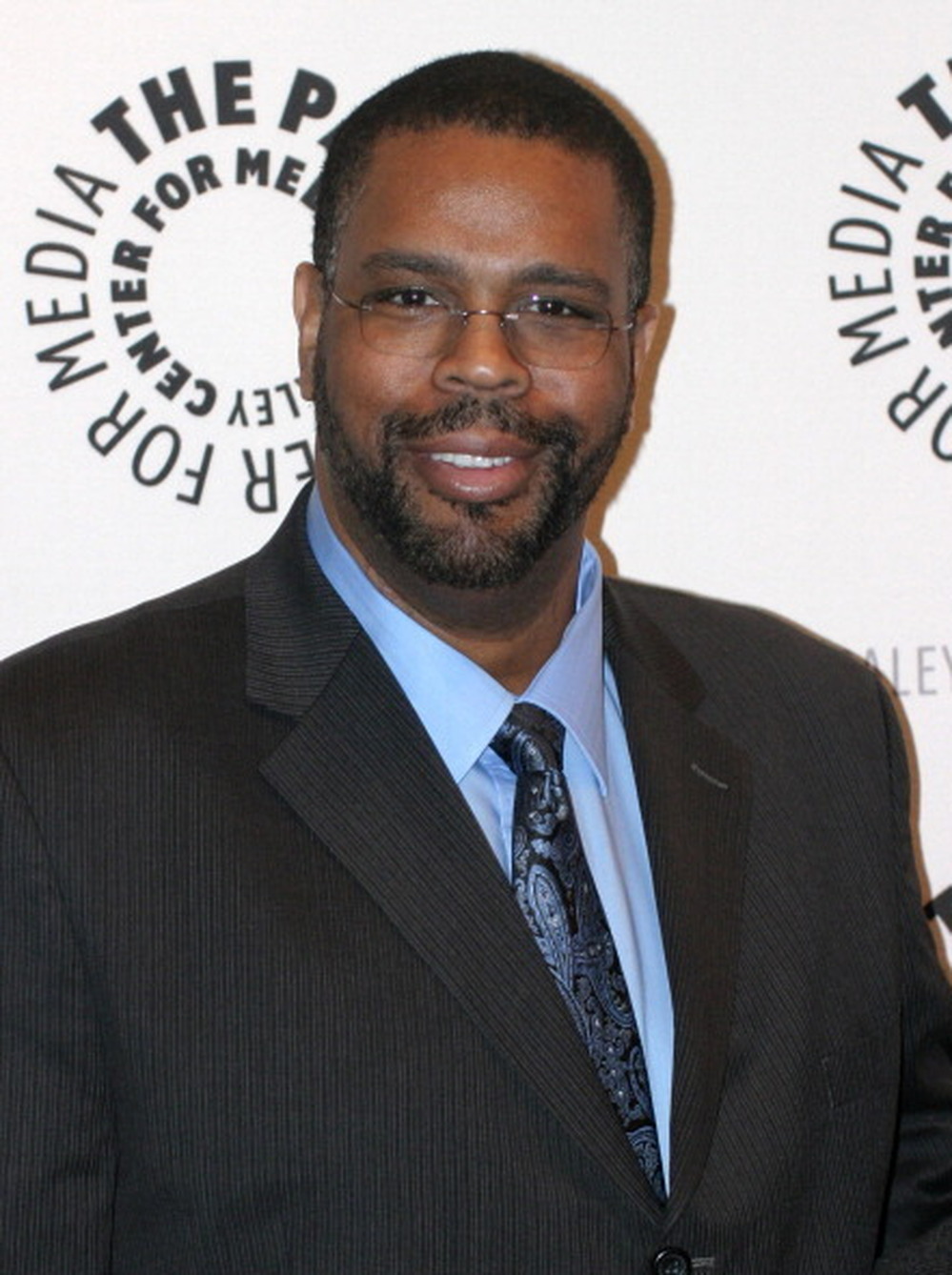
Dwayne McDuffie, RIP: Championed Diversity Among Champions

by Glen Weldon


Dwayne McDuffie was a guy who made a living writing for comics and TV. If you don't know his name, your friends who read comics do. If your kids have watched cartoons in the last decade, they've more than likely seen some of his work.

Yesterday we learned that McDuffie passed away suddenly at the age of 49. The website Comic Book Resources reports that he died from complications following surgery, but details are still coming in.

His individual contributions as a writer and producer, which I'll get to in a bit, remain impressive. But McDuffie was more than a writer, he was a voice — a passionate proponent for change in a genre (superhero comics) that reflexively resists it. And it's that voice that will be most acutely missed.

He started out in the '80s as an editor at Marvel before leaving to do freelance writing for DC, Marvel and Archie. In 1993 he co-founded Milestone, a company dedicated to "expanding the role of minorities both on the [comics] page and off..."

There, he launched several new characters, most notably Static, an electromagnetically-powered black teenage hero. (The character went on to star in the Saturday morning series Static Shock, which ran from 2000-2004.)

He wrote for the Cartoon Network series Justice League, and when that series underwent a change in format to become Justice League Unlimited, with a new focus on the deep bench of DC heroes and villains, McDuffie became a story editor. In recent years, he continued to write for comics like Firestorm, Fantastic Four and Justice League of America (where he beefed up the roles of black heroes in the JLA roster).

Most recently, he scripted the just-released, direct-to-DVD adaptation of Grant Morrison and Frank Quitely's definitive, 12-issue All-Star Superman series. And he did a fantastic job, capturing the whiz-bang, idea-a-minute tone of Morrison's story while finding and delineating its emotional through-line.

Of all the encomiums that rolled in yesterday, the one that resonated most strongly with me came from Kevin Church, a webcomic writer and comics blogger who has criticized McDuffie's work in the past - especially his JLA run. (To be fair, McDuffie himself spoke — bluntly — of the challenges of writing a flagship book like JLA, which is uniquely subject to corporate/editorial edicts.)

In a brief blog post, Church neatly deconstructs and dismisses the "Dwayne wrote about characters first, race second" meme that started making the rounds immediately after McDuffie's death.

"[McDuffie] brought the experience he had as a black kid growing up in Detroit in the 70s and 80s to every project he got his hands on by choosing directly not to emulate what he'd seen in the comic books he read, but by creating what he wished he had read," Church writes.

I wasn't reading comics in the '90s, so I'll leave it to others to speak to the specifics of the Milestone books.

But I'm of the generation who got turned on to superheroes in particular and comics in general by television. If it hadn't been for reruns of the '60s Batman show and Spider-Man cartoon, I might never have taken a second look at the spinner rack of the West Goshen Book and Card Store, back in 1973. And sealed my fate.

Which is why McDuffie's work on shows like Justice League, and especially Static Shock, has a special importance, and it's what I'll remember. His characters had personalities, not outsize personality disorders. They were heroic because they chose to be, not because it was their job. Race was dealt with matter-of-factly, but it was dealt with.

A new generation of kids who watched McDuffie's work saw worlds full of heroes — worlds that looked a lot like their own, and heroes that looked a lot like them.

Did McDuffie's pugnaciousness on matters of diversity (read the very funny memo he wrote when, as a Marvel editor, he detected a surfeit of skateboardin' black superheroes) change superhero comics forever?

As we've talked about before, superhero comics tend to reach for the RESET button every few years, and that means certain advancements get pushed back. Temporarily.

But McDuffie was a passionate writer and advocate, and here's the great thing about the kind of passion he embodied, which is born of a sense of justice and the desire to be heard:

It's catching.


Glenn Weldon writes for NPR's Monkey See Blog.

Monday, February 14, 2011

Guest Blog - Invisible Woman's Take On The Busters *cough* Oscars


OK, after months of speculation, the Oscar nominees have arrived. How many of you were satisfied with the lists?

I, for one, have stopped taking the Oscars seriously years ago; it is such an elitist and "inside" group, and we all should know by now that the politics involved have people winning awards that really have no business doing so. They throw out a bone every few years to someone that is Black, and it is always hailed and regaled as a "victory" to open doors, but afterward we are once again subjected to a few more years of complete and total white-washing. But it has gone beyond that...where are the accolades for Latinos? For Asians? For Eastern Indians?

Hollywood never, ever, EVER seems to understand that diversity makes life (and their lame awards show) interesting. Everyone remembers Monique winning last year, but can you name three others (be honest)?

There is an old saying that I have always remembered, taken from an ancient Chinese philosophy book, and it applies to the Academy in volumes:
"Diversity is actually an important and necessary ingredient, which adds creative spice to a group."
Film is universal! The stories told in ANY film are relevant to a good portion of the population, regardless of race. Until Hollywood and the Academy can get this through their heads, I am down with the mission of AFFRM. If you don't know what AFFRM is, please click here and support! And oh yeah, I will NOT be watching the show this year...cheers!

UPDATE: Please check out CNN's article on this issue...the comments over there are sincerely pathetic and sad, and will boggle the mind. I am convinced, more than ever before, that we are completely unsupported in Hollywood, and must step away from the studios and an intolerant audience in order to have a system that allows us to create and be heard. Racism in conventional Hollywood is apparently NOT disappearing anytime soon, and has zero interest in doing so.

If you would like to read more of Invisible Woman's thoughts on cinema, check her out at Black Cinema At Large.


Thanks for stopping by,

8

Tuesday, November 9, 2010

Authors@Google: Alice Walker


In October, 2010, Alice Walker joined Googlers in Mountain View for a day of conversation and readings from her latest book of poetry, Hard Times Require Furious Dancing.
"[This] collection of new poems is written especially for the times we're living through. Alice Walker is known throughout the world as not only a great writer but an activist and a woman who shares the inner turmoil and outer struggles of her life. Readers admire her ability to bare her heart and soul, but to also speak out about the world as she sees it, often becoming a catalyst for change.

As the title [Hard Times Require Furious Dancing] suggests, these poems were written during struggles and sadness and deal with the loss of siblings, the loss of a beloved dog, the estrangement in families, violence and struggles on the world stage, and the simple joy of life itself. The words dance, they sing, they heal our hearts and touch our souls."
Check out Alice Walker's Blog & Alice Walker On Youtube.


Thanks for stopping by,

8