Showing posts with label Black Community. Show all posts

Friday, September 14, 2012

Nikki Lynette On Chief Keef & Violence In Chicago


What nobody wants you to know about the violence in Chicago
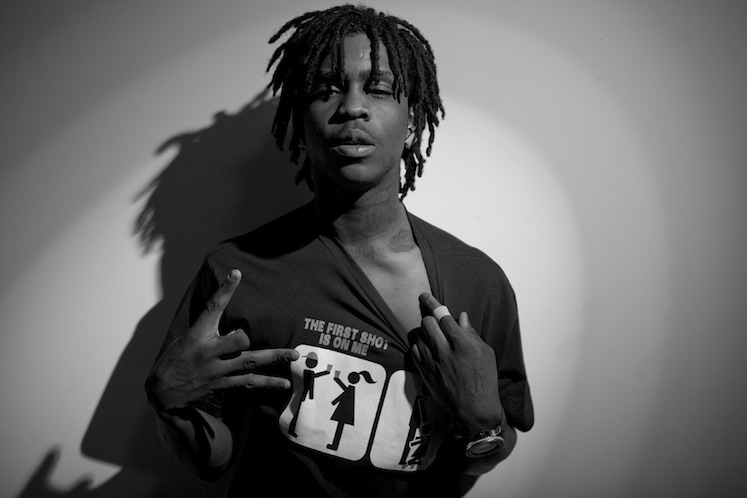
I have been in New York on business for the past couple weeks. Every time someone finds out I'm from Chicago, the reply is always something like "Yo... Chicago is going crazy right now." Then they quote something to me about the latest death toll in my hometown. Honestly, I don't wanna hear that shit. I grew up around gang violence and poverty. It wasn't until I witnessed a murder/suicide in the apartment across the hall from me that I decided to save up money and leave the hood for good.

One of my friends who runs a prominent hip hop blog here in New York asked me why Chicago is so much worse this year and why our city is so bad that people like Cheif Keef were able to build a buzz by "talking that little kid street shit." I looked him in his eyes and said "Because people like you publicize it. You helped make Cheif Keef a star. People in Chicago finally get to see someone from the block getting fame, and it just so happens the rappers from Chicago who y'all choose to acknowledge are on some goon shit. So don't talk to me about the violence in my city. You contributed."

Thursday, July 28, 2011

I Wish The News Covered MY Pittsburgh

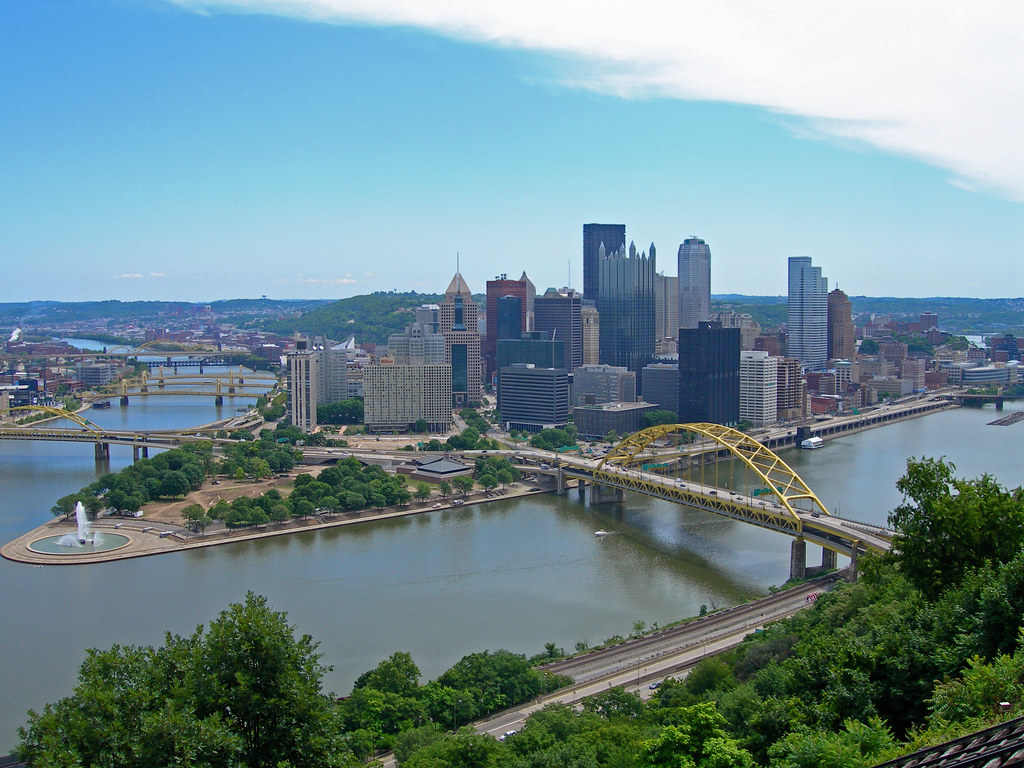
It's funny, I used to often talk to friends that aren't from this area about my city and my less than positive opinion of it.  Most of those I talk to a pretty smart and know there way around the internet.  I would tell them about how much I dislike my city and why, while they would see different articles online about how livable or affordable it is.  I would always tell them that its great if you're white, but as a Black person . . . not so much.  The images of Pittsburgh and Pittsburghers are pretty much whitewashed on a nationally.  The successful Blacks in the city are primarily athletes that play for local teams (read: STEELERS) and are just passing through.

Monday, April 25, 2011

My Life As One Of The Most Hated Men In America


A friend of mine recently sent me this blog entry titled, The Short End Of The Stick: Women, Height Preferences, and Hypocrisy.  When I originally saw the title, I was definitely suspicious for two reasons.  One, the friend who sent it has playfully chided me about my height along with her love of Vince Vaughn's height.  She's also thrown around the term, Napoleon complex, once or twice.  Secondly, considering the subject I assumed that me along with my vertically challenged brethren would be the butt of yet another joke at the expense of women and taller men.  I must say that I was pleasantly surprised.  Not only did the blog not ridicule, but it actually read like a blog entry that I have kicked around in my head many times.

Friday, April 1, 2011

The Whitewashing Of Mixed (Black) Women In Hollywood

I must confess that it's something that has always irked me to a degree.  I've discussed this in the past in regards to Maya Rudolph and her movie, Away We Go.  Lately, we seem to routinely be given the pairing of a white man with a racially ambiguous woman with no family of her own or friends that aren't white.  Recently I went to the movies and was once again slapped in the face with this recurring theme when I saw the poster for her latest project, Bridesmaids.  As dismayed as I was and currently am my feelings for Maya haven't changed from my original blog entry.  So, due to my feelings for her and the fact that the trailer is hilarious, I will more than likely be at my local theater dealing with my ambivalence as best I can.

The inspiration for this entry came from an article on Rashida Jones "passing" through Hollywood.  In the piece the writer cites a quote from Ms. Jones in Racialicious:

Thursday, March 24, 2011

Me & Jay Smooth (@jsmooth995) On Chris Brown

This the epitome of why I love Jay Smooth. He often seems to say exactly what I'm feeling in a much more eloquent way. In this three minute video he expressed the EXACT feelings that I had during a Twitter discussion the morning of the incident in question with a couple of friends. I believed that Chris really hadn't paid much of a price while others didn't think the questions were fair to ask after two years. The fact that he knew the questions were coming make his conduct all the more bizarre. Enough of me, let's hear what Jay had to say:

Saturday, February 26, 2011

Revisiting The Scene Of A Crime

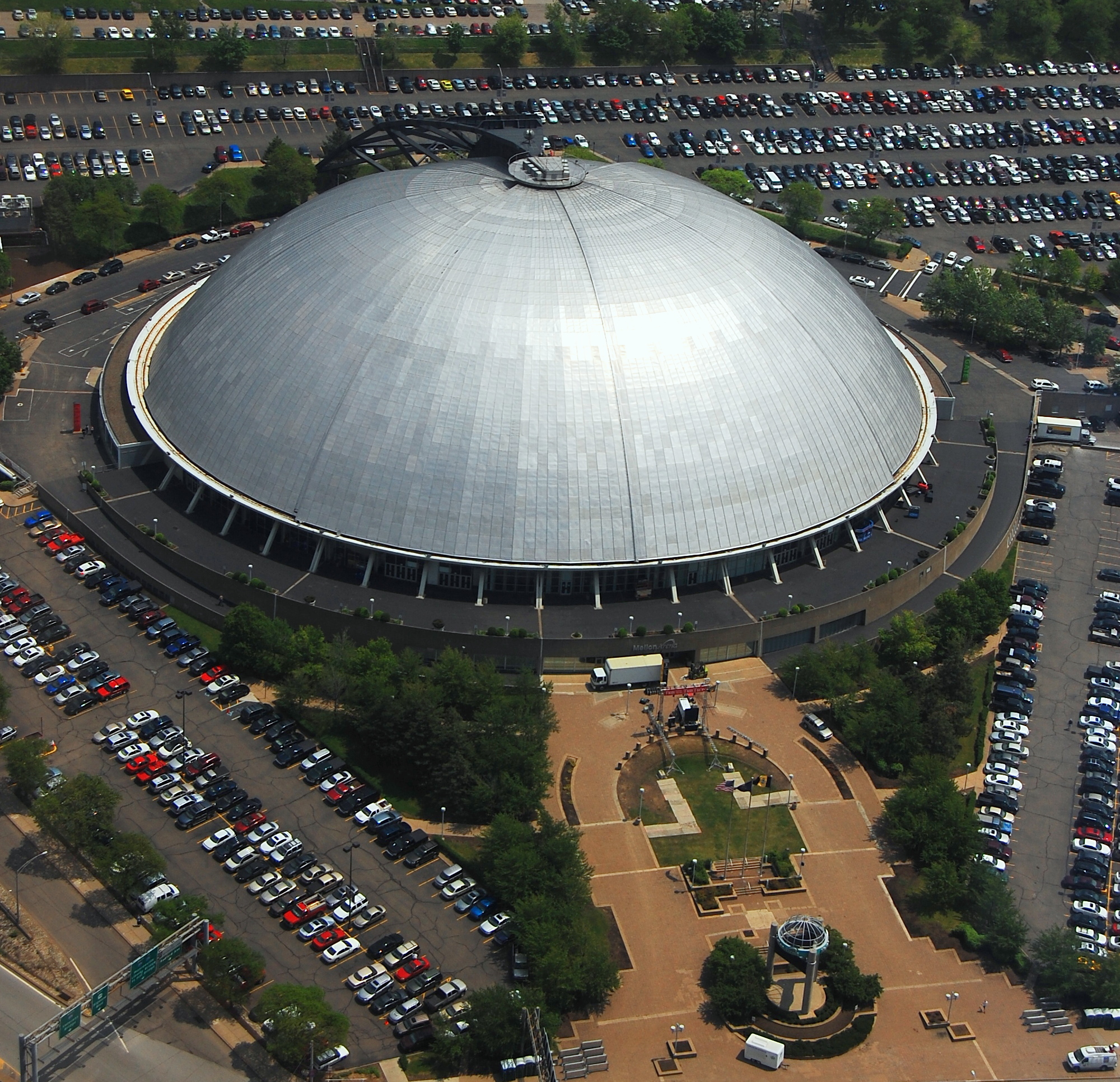
Civic Arena: crime scene

But don’t wipe away the evidence; build something special

By David Conrad

Post-Gazette columnist Brian O’Neill finally said out loud what everyone knows is true (“Point of Realism Interferes with Preserving Arena,” Feb. 8): Whatever replaces the Civic Arena, in the end, must serve the needs and growth of the Hill District as much as it serves the Penguins’ bottom line.


A wound needs to be healed. A wrong needs to be righted. Seems like a no-brainer. But it’s not so easy.

The Penguins have legal development rights to the property. They can do almost whatever they want with it. They should not. They should show enormous forbearance, unprecedented in the history of corporate America, and agree to a cooperative master plan. One that still makes them money, but one in which they let other architects, the Hill community and local leaders have actual design power.

Yes, I am saying that a company with the legal right to develop property should relinquish substantial control. Call me a socialist, or a libertarian, or a whatever.

The Civic Arena was built by legal means. The group that tore down the Lower Hill was legally entitled to do so. The development was called a triumph. But it was a crime.

Big news: Just because something’s legal doesn’t mean it’s right. Just because you have legal rights to something doesn’t always mean you have no one to answer to when you want to chuck it. Especially when that something is a monument.

Yes, the arena is an important symbol, an historically crucial object. Because it’s a modernist masterpiece? I’m no architect, but I’d have to say, “No.”


It’s important because it’s evidence in a crime scene. It’s a weapon left on a battlefield. And this sword should be made into a plough share.

We should never forget what happened on those 28 acres. A strong, nationally known working-class neighborhood was wiped away. A neighborhood that gave Pittsburgh and America a symphony of cultural giants — musicians, actors, merchants, sports heroes and civic leaders — was chopped off at the knees.

The Hill gave generations of immigrants a foothold in this country, it gave them their first home and it gave them a voice — quite literally with the Pittsburgh Courier, which was to the African-American population The New York Times of its day.

The Hill. August Wilson’s crucible for the greatest play cycle in American literature. The home of the Crawfords, the fiercest baseball team that ever graced a diamond.

Pittsburgh’s Hill District. In a city whose racism went quietly unpublished but which could be as brutal as Selma’s, the Hill was a beacon to black communities nationwide. And then it was a parking lot. And a place to see the Beach Boys.

As they say in the vernacular, we gotta own that.

Building another Waterfront or South Side Works, surrounded by parking lots that block off the Hill, again, is not gonna do that.

Building “safe” evening entertainment for suburban sports fans is not gonna do that.

What greater Pittsburgh, as a whole, needs to own up to and answer to is our responsibility for the future of the Hill.

The Lower Hill development will for better or worse remake the face of the city for the next 50 years. There’s no larger, more central piece of property left to dream on. And that’s what should happen. What is built there shouldn’t just make a dime, it should make everyone, black and white, drop their jaws.

Pittsburgh, hard-bitten and practical though it seems, is a magical place. It’s weird and warped and beautiful and it makes you want to fight for it. The number of men I’ve seen cry openly as they told me how they wished they could move back here I can’t count.

Right now, we’re just starting to stanch the population loss, we’re getting people to love it here, we’re riding a national obsession with “authenticity,” we’re the heart of Steeler Nation, we keep getting called the “most livable city,” and we might be the only place in America were Republicans and Democrats could actually find some middle ground.

The city’s at a turning point. Pittsburgh’s poised to make it. And we are about to run smack into the greatest financial crisis in the city’s history. What to do?

Break the law. Yes, you heard me. Declare, as a group, that “we” the people of Pittsburgh “own” what happens here.

I’m not saying storm the offices of Oxford Development Company and the Penguins, but ask for a smarter plan. Ask that your leaders, your politicians, your sports heroes and your foundations stop shrugging their shoulders. It’s not so simple as “it’s up to the Pens” or “we just gotta get something built.”

No. That thinking gave us two empty department stores, 400 lofts no one lives in and a subway to nowhere. We’re better than that.

Make them step up. Three major foundations bought the site of the former Hazelwood coke plant to avoid exactly what’s being designed for the Hill — a soft outdoor mall town that would be the modern equivalent of what the arena was 50 years ago: a crime.

Why doesn’t the Hill get the same equity? The same skin in the game?

Pittsburgh and the Hill deserve a better shake. A deeper process. One that, in the end, will create something that not only makes everyone involved more money than a series of movie theaters and cheesecake factories walled in by parking garages but that also will be a thing of beauty and strength that ties the Hill back into the life of the city it was meant to be a part of. A thing that people all over the country will travel to see.

If getting a court injunction to save some of the Civic Arena serves that purpose by starting the process, then I’m all for it.

I’m not saying the Penguins could never build something great on their own. I’m just saying they probably won’t and, in some sense, it isn’t their responsibility. It’s ours.

They aren’t tearing down the arena for the benefit of the Hill; they’re tearing it down to make money, which is their job — aside from winning hockey games.

In most situations, I’d say, go to it. If the Hill District Community Development Corp. owned the arena and wanted to tear it down, I’d say, it’s all yours.

But who wins when you cut off your nose to spite your face? What monument does vengeance leave for our children to play in?

The circumstances are strange here.

In Pittsburgh? Go figure.

David Conrad, an actor who starred in the CBS television series “Ghost Whisperer,” grew up in Swissvale and now lives in Braddock.

*First photo courtesy of Scott Michaels
**Third photo courtesy of Kyle Kebert
***This was an opinion column that ran in the Pittsburgh Post-Gazette.

Wednesday, February 23, 2011

IFC Sits Down With "Night Catches Us" Director Tanya Hamilton

A Spirited Q & A With "Night Catches Us" Director Tanya Hamilton

The Best First Feature nominee on capturing the revolution of the Black Power movement in a quiet way.

by Stephen Saito


As a way of celebrating this year's nominees for the Spirit Awards in the weeks leading up to the ceremony, we reached out to as many as we could in an effort to better understand what went into their films, what they've gotten out of the experience, and where they've found their inspiration, both in regards to their work and other works of art that might've inspired them from the past year. Their answers will be published on a daily basis throughout February.

If you didn't know Tanya Hamilton was a painter long before she ever studied filmmaking, you'd probably guess it roughly 15 minutes into her debut film "Night Catches Us." In her Spirit Award nominee for Best First Feature, Hamilton does something extraordinary with what is ostensibly a period piece about two former Black Panthers trying to find their way in the years after the movement's dissipated -- she turns the ordinary into art. Told in glances as much as words, the story is one deeply rooted in history and yet isn't inhibited at all by it, and surely not in the way its main characters are.

That past is brought to the fore when a picture of Marcus (Anthony Mackie), Patricia (Kerry Washington) and her late husband Neal falls from the pages of a comic book that Patty's daughter (Jamara Griffin) flips through, which coincides with Marcus' return to Philadelphia for his father's funeral. Neal's death hasn't been explained to his daughter, nor does Hamilton seem to be in a rush to share it with the audience, letting it linger as just one of the many aspects of a time that's largely uncertain. Neither Marcus or Patricia are entirely the idealists they once were -- they can't afford to be -- though each are still headstrong in a world where there still isn't racial equality.

The true beauty of "Night Catches Us," aside from the elegant cinematography of David Tumblety and musical flourishes from The Roots, is how it presents such complex emotions in such a simple way. Having two of this generation's finest actors in Mackie and Washington certainly doesn't hurt, but the film is particularly striking in the way it drops in archival footage, bits of animation, and static shots of the working-class Philadelphia neighborhood where it's set to capture the essence of the era without overwhelming the story at hand, which is akin to a tale of two lions forced to consider captivity. Whether its characters can ever break free is the central question of the film, but in terms of its own independent spirit, "Night Catches Us" answers with a resounding yes.

Why did you want to make this film?

I'm very interested in that section of time. I think that period of history is so interesting and there's something tragic and romantic and kind of beautiful about that whole Black Power era. It's not my history, but I was definitely interested in how the idea of revolution in a way might affect these people and I was trying to figure out a way to look at it from the aftermath of the movement and to look at it from this very mundane, ordinary perspective.

What was the best piece of advice you received prior to the making of the film?

The best piece of advice probably comes from my husband who's a fiction writer and really encouraged me to focus in on the minutiae of the world and also to look at the small moments rather than anything big and dramatic. That's something that I'm very inclined to be interested in anyway, but also, it's something that I kept with me throughout making the film, both how I directed it and how it was cut and sort of visually.

What was the toughest thing to overcome, whether in a particular scene or the film as a whole?

It may be a very cliché answer, but I think it was money. It really does dictate so much of what either gets done or doesn't get done. Maybe a nicer answer is I had to cut the screenplay down from 125 pages roughly to some place in the eighties. And that was obviously because of money. We had a very tiny budget to shoot it and so it was tough to have to do that, but in an odd way actually, I think it was good. I made some mistakes -- I can see them -- but in general, I think the film ended up being stronger because of it.

What's been the most memorable moment while you've traveled with the film, either at a festival or otherwise?

I had a woman come up to me, I think, in Chicago who was probably in her seventies and was just such a regular working woman and she said that she liked the film a lot. She felt there were some problems with it, but overall she liked it. And I appreciated having this woman who is part of a demographic...these kinds of movies don't always speak to that kind of demographic. I think the movies sometimes can also be narrow in their scope. And I appreciated that this woman came to see it and it resonated with her and I appreciated that she was honest to say she thought there were problems with it, but that she connected with the characters in the world. I felt very heartened by it.

What's your favorite thing about your film that's largely been uncommented upon?

I love the visual language of it a lot. I love the work that David Tumblety, who shot it, did - I think he's an artist. I think as artists we were both able to work really well together and I love the way it looks and I love the small visual moments. That kind of goes back to that minutiae. I love many things about it, but I love the language a lot.

What's been the most gratifying thing to come out of this film for you personally?

I think that probably the most gratifying part, beyond getting to work with people I really like a lot and building a little bit of a quasi-creative family, is that I got to show the film to so many people across the U.S. and that I was able to have so many conversations with ordinary people and the varied arc of the people, whether it was the kind of people who are very much part of the audience for movies like this or people who are completely not in any way. I loved the scope of that. I loved hearing what they had to say, positive and negative, and I think it broadened my sense of what an audience is and how important an audience is, which is something I didn't actually, frankly, recognize before making it.

What's been your favorite film, book or album from the past year?

I have a four-year-old, so I sadly don't ever get out to see movies anymore. That's sort of pathetic. Maybe a book is more appropriate and it's a book I had not read before and found really fascinating. It's a book called "The Intuitionist" by Colson Whitehead that is a marvelously brilliant book, a metaphor about race and politics and I really liked it a lot.

"Night Catches Us" is now available on DVD and Blu-ray. The Spirit Awards will air on IFC on February 26th.

Tuesday, January 11, 2011

An Article On Tyler Perry That I Wish I Had Written

I know that this review of Tyler Perry's For Colored Girls is more than a few months old, but I decided to post this article because it did a great job of articulating some of the strong feelings that I have for Mr. Perry's work in general.  I also find Cortland Milloy to be an unbelievable columnist.


I've never stepped foot in DC a day in my life, but I usually make it a point to check WashingtonPost.com for his work.  He has a point of view that definitely seems to be underrepresented and under-appreciated in television, radio, print or online media.


For Black Men Who Have Considered Homicide After Watching Another Perry Movie

By Courtland Milloy
Washington Post Staff Writer
Monday, November 8, 2010

Can anyone name a movie that came out recently starring a black man who wasn't a sociopath? Someone who had a terrific screen presence, like a young Paul Robeson? And he portrayed a character who was complex and fully drawn? Did he respect black women, too?

Anybody see that movie? I didn't. But surely it's out there somewhere, right? An alternative to those Tyler Perry films portraying black men as Satan's gift to black women? But where is it?

Maybe I didn't hear about it because of all the buzz over Perry's "For Colored Girls," which opened Friday and is based on Ntozake Shange's 1975 stage play, "For Colored Girls Who Have Considered Suicide When the Rainbow is Enuf."

Or maybe I didn't hear about it because I was retching too loudly after seeing "For Colored Girls" - and reading so many inexplicably glowing reviews.

"This movie is powerful," Demetria L. Lucas wrote recently in Essence, the nation's premier magazine for black women. "It is incredible. The performances in it are astonishing, but most of all, this film will leave you lifted."

Me, I thought the movie should have been renamed: "For Black Men Who Have Considered Homicide After Watching Another Perry Movie."

"Oscar buzz, breaking news," read the Hollywood Reporter on Friday. "Will 'For Colored Girls' blindside Tyler Perry's critics?"

Too late. I was blindsided while watching the movie, especially when superstar Janet Jackson appeared onscreen looking like Michael Jackson with breast implants.

"Don't laugh," says Shadow and Act, an online publication about black films and filmmakers. " 'For Colored Girls,' an Oscar contender?"

Oscar for what?

In the category for best infection of a black woman with a sexually transmitted disease that renders her infertile. . . . And the winner is: black man.

For best down-low, double-dealing husband who has sex with wife while sneaking around having sex with men on the streets. . . . And the winner is: black man.

For best portrayal of a guy who at first seems nice but turns out to be a rapist. . . . And the winner is - OMG, his third of the night - black man!

"You may need some time alone after viewing 'For Colored Girls,' " wrote Tonya Pendleton for BlackAmericaWeb.com. "Whatever you may think of the fact that it was Tyler Perry who finally brought the award-winning 1974 Ntozake Shange stage production to the big screen, it will move you."

So will ex-lax.

"You will want to know that two kids get thrown out the window by their father," wrote Jane Nosonchuk for Hamptonroads.com. "The scene is well done."

Do I hear another Oscar nomination?

"The men in the movie are all bad guys except for the cop," Nosonchuk wrote. "They are a means to an end rather than any lead characters. Also, a back-room abortion may disturb some."

You think?

What an awful year for movies featuring black actors. Samuel L. Jackson in "Unthinkable." Thoughtless would be more like it. "Brooklyn's Finest" had a nice cast, with Don Cheadle and Wesley Snipes. But Richard Gere and Ethan Hawke got top billing. "Our Family Wedding" with Forrest Whitaker was okay. But how many black wedding comedies can you watch? Even preacher T.D. Jakes is coming out with his own copycat wedding movie next year.

Surely Spike Lee and Denzel Washington could team up for a sweeping historical drama - say, a black sharecropper's son, educated in a one-room schoolhouse built by slaves in Alabama, who grows up to become one of Wall Street's most powerful CEOs.

Smarter than Gordon Gekko and more complex. With a cameo appearance by former Merrill Lynch chief executive Stanley O'Neal.

Maybe you saw the kind of movie I'm talking about. If not, maybe it's time to make one.

milloyc@washpost.com


*Artwork courtesy of Tatyana Fazlalizadeh

Tuesday, November 9, 2010

Authors@Google: Alice Walker


In October, 2010, Alice Walker joined Googlers in Mountain View for a day of conversation and readings from her latest book of poetry, Hard Times Require Furious Dancing.
"[This] collection of new poems is written especially for the times we're living through. Alice Walker is known throughout the world as not only a great writer but an activist and a woman who shares the inner turmoil and outer struggles of her life. Readers admire her ability to bare her heart and soul, but to also speak out about the world as she sees it, often becoming a catalyst for change.

As the title [Hard Times Require Furious Dancing] suggests, these poems were written during struggles and sadness and deal with the loss of siblings, the loss of a beloved dog, the estrangement in families, violence and struggles on the world stage, and the simple joy of life itself. The words dance, they sing, they heal our hearts and touch our souls."
Check out Alice Walker's Blog & Alice Walker On Youtube.


Thanks for stopping by,

8

Monday, July 26, 2010

Was/Is It All Worth It?


I ask myself if it was all of the time and each day I come closer to saying, "no it wasn't".  I'm not going to go all Kanye and tell anyone not to go to school, but if I knew then what I know now I might not have bothered going to college.  I just thought I would pass along this article I found because it hit a tad too close to home. At least I'm not alone.

Many Young Adults in Poverty Have a College Degree, Report Says

By Sara Lipka

Increasing proportions of low-income young adults are pursuing higher education, but some remain poor even with a postsecondary degree, according to a new report from the Institute for Higher Education Policy.

In 2008, among Americans ages 18 to 26 whose total household income was near or below the federal poverty level, 47 percent were or had been enrolled in college, compared with 42 percent in 2000. Eleven percent of them had earned a degree, a proportion roughly equivalent to that eight years ago, according to the report, which is based on data from the U.S. Census Bureau's American Community Survey.

The institute is a nonprofit group in Washington that conducts public-policy research to encourage access and success in higher education.

In introducing its report, the group called into question President Obama's declaration in his State of the Union address in January that "the best anti-poverty program around is a world-class education." Poor students go to college academically unprepared, the report says, and, amid competing family and work obligations, they accumulate debt "that could have been avoided by pursuing a different type of degree or a credential."

None of the 11 percent of low-income graduates should remain in poverty, said Gregory S. Kienzl, director of research and evaluation at the Institute for Higher Education Policy. "If you have a degree, you should no longer be poor," he said.

Across all racial and ethnic groups, greater proportions of low-income young adults were or had been enrolled in college in 2008, compared with 2000. Hispanic students showed the largest percentage-point increase, to 37 percent from 29 percent. Low-income Asian and Pacific Islander and white students enrolled at the highest rates in 2008, 62 percent and 51 percent, respectively; the greatest proportions of low-income degree holders were also from those groups.

The report, "A Portrait of Low-Income Young Adults in Education," is the first in a series financed in part by the Bill & Melinda Gates Foundation. The next report will focus on attendance and enrollment patterns among low-income students, Mr. Kienzl said, including that black and Hispanic women more often attend for-profit institutions than public four-year colleges.

Article courtesy of Chronicle.com

Thanks for stopping by,

8

Wednesday, July 21, 2010

Mos Def - Priority/Raise Hope For Congo


Mos Def's Priority is his contribution to the RAISE Hope For Congo campaign, which aims to stop violence against women in Democratic Republic Of The Congo.  Mos' song appears on the campaign's compilation album, Raise Hope for Congo.  If you would like to make a donation of buy the album as a digital download, visit RaiseHopeForCongoMusic.org.


A Letter To The Draper Family Of 'Mad Men' From The Black Maid

I am not a close follower of AMC's Mad Men.  I have caught any episodes that have been currently on demand when there is nothing of interest on television.   To tell you how closely I follow it, I didn't even know there was a Black maid on the show.  Ha!  I know that the show has become a bit of a phenomenon and with the premiere of it's fourth season days away I stumbled upon this and thought I would pass it along to you.  Enjoy!

Dear Drapers: A letter to 'Mad Men's' first family from their Black maid

"I have a 3 second break between taking care of your family and mine."


By
Kartina Richardson


Dear Drapers,

Season 4 of Mad Men is about to start. My summer was really nice not that you asked, and I'm not looking forward to coming back into your crazy house of sex, lies, and bratty kids (thanks for popping another one out, that's exactly what we all needed). Now that darling Bets is gone, it's up to me to take care of the house and I have a few things to say. I know I usually don't talk, even though we all know what was going on in the Sixties. I think the writers are troubled and don't really know how to address race in a smart way without it taking over the whole story. They probably think:


"The show is about Don, not black people, but let's make Carla extra dignified and sometimes she can show the audience that she is aware of bullshit by giving little grimaces. That way Carla becomes someone who's witnessing. She's on the sidelines but she has the power of judgment. That's even better! That way we can cover our race bases without it getting in the way. Kind of like the black guy in Ghostbusters."


Oh, they think they're so clever. Well I don't buy that dubious explanation. I don't want the power of judgment. I want a full plot line dammit. Maybe Roger has a butler and he and I can get together. I mean really get together, and our hot passionate love affair will bring us on a freedom ride down to Alabama where we will love each other in the sticky, sweaty Alabaman heat... and Sterling Cooper has some business down there and they do some advertising blah blah blah.


But in the meantime I have a few things I need to get off my chest before everything begins again on Sunday.


First, can I get a drink every now and then? Jesus. You all drink a bottle of whiskey every two seconds whenever, wherever, so it's not like I have to be sober to watch the children. Don't even. It would be a hell of a lot easier to deal with whatever new craziness Betty's dad is going to bring to the table if I was a little drunk. Oh he's dead. Sorry. (Not really. He was a real jackass to me).


And by the way Don, thank you for screwing up my life even more with your constant cheating. Now Betty is gone and I'm either
:
A) Going to have to live with Henry and I know his maid and she's a b---- and we do not get along.

B) Betty will leave the kids with you and I'll have to do everything myself and work longer hours.
or
C) You'll fire me (but I'm your only black character and tie to the Civil Rights Movement so how could you fire me?)


I know you don't know who you are and you've got a million identity issues, your dad was a real s--- and... wait, wait, do you hear that? It's the world's tiniest violin playing just for you. Guess what? My family all lives in Mississippi. You know what's going on there? Oh just the Ku Klux Klan, lynchings, murders, and an overall air of fear and violence. In fact in June of this year, three civil rights workers will be murdered during Freedom Summer. So cry me a river mystery man (the Klan will probably use it to dump bodies in but no big deal let me fix you a sandwich).


Speaking of Freedom Summer, President Johnson signs the Civil Rights Act in June and Martin Luther King Jr. is awarded the Nobel Peace Prize. Can I get a little freedom away from your family for this? I would like to celebrate with my family. I would not like to be standing in the kitchen, drying my hands on a towel while Sally eats a hot dog and Bobby says "I don't like brussel sprouts." For real you don't like brussel sprouts? You know what my kids don't like? Being black in 1964. Why? Because if you're not on Motown Records it sucks.


Oh and Betty, I hate you. I have always hated you. I've never shown it because I've always thought you were crazy. Like the silent psychopathic type capable of anything. That time you shot the neighbor's pigeons confirmed this. Oh hell yeah I saw that.


Visit TheLoop21.com to continue reading.

Thanks for stopping by,

8

Public Enemy - The Black CNN (Audio Documentary)

Sucio Smash of Columbia University's Squeeze Radio on WKCR 89.9FM in New York City recently played this BBC Radio 4 documentary on Public Enemy called "The Black CNN': When Hip Hop Took Control".  It's an incredible listen.

The Black CNN: When Hip Hop Took Control


Sucio Smash's Public Enemy Special Mix


*Special thanks to DJ Sarah Love for audio & Live From Philly for the visual!


Thanks for stopping by,

8

Sunday, June 13, 2010

Random Thoughts: Complete Non Sequiturs & Apropos Of Nothing (Vol. II)

If you were looking for a mixtape or music, this entry probably isn't for you.  This blog entry will just be my random thoughts on different things.  Some of these things with be serious and some of them with be strictly "Stuff" That May Interest Only Me.  Basically it's just a brief glimpse into my stream of consciousness. Basically it's my ode to Larry King.  Ready?

Something that I don't understand is that when on twitter and someone has a an account and they aren't even the slightest bit interested in the protected accounts that follow them. I know if anyone with a protected/private account asks to follow me, I definitely want to see their page as well. The lack of curiosity of others just surprises me at times . . . How could "hip-hop" boutiques not carry t-shirts in XXXL?  I mean most of your clientele prefer baggy or loose fit clothing so it seems that XXXL would be an obvious size to carry . . . I previously mentioned how I finally rejoined the army of smart phone users.  Well, I was bored yesterday and decided to test out it's turn by turn navigation system.  It utilizes Google Maps Navigation and requires you to download a text to speech application.  I don't know why but I was surprised it worked as great as it did.  My past experiences with GPS have many times ended with me in a shouting match with the Garmin lady.  She loved telling me to turn at the last minute possible.  We have a love/hate relationship . . . It's odd, but since coming back home I have noticed that people are far more closed off in Pittsburgh than Chicago.  They seem to only want to deal with the people they grew up with and that's it.  I don't think it's a coincidence that those friends that I have made in Pittsburgh post-high school have for the most part not been native Pittsburghers . . . Apparently a man named Thug ticked off a few people this week.  Sadly, some of those people began to take their anger out on the messenger.  I guess these same people never saw an episode of What Chili Wants?  I think the biggest issue that started everything is that people have horrible reading comprehension skills.  He really didn’t say anything that was THAT crazy.  He was talking about the kind of women that he comes in contact with.  One can only imagine the type of women that your average rapper with Thug in his name may come in contact with.  . . . It sucks when you aren't being treated the best by someone who's done a lot for you.  You don't feel the best, but you also know that you don't really have a right to complain at the same time.

Thanks for stopping by and lending an ear/pair of eyes,

8

Friday, March 26, 2010

Afrolatinos: The Untaught Story


Afrolatinos “The Untaught Story” is a documentary television series independently produced by Creador Pictures, LLC. The program will illustrate history and celebrate the rich culture of people in Latin America of African descent. From the story of how and when slaves came to Central and South America to identity issues that still exist in the Hispanic community today. There are an estimated 200 million Afro-descendants in Latin America but the majority of them do not have political or economic power. This documentary takes you on a journey to meet Afrolatinos throughout Spanish and Portuguese speaking nations and an exploration and appreciation of their culture. It will also teach the uninformed and hopefully initiate social change throughout Latin America.
The documentary series will begin with the slave trade in the early 1500’s and touch on the Cimarron (Palenque) communities, as well as cover the controversial theory of the African presence in ancient America. The programs quest is to better understand the religious connections and distinctions between the Catholic Church and religious practices such as Yoruba and Voodoo. We learn about these religious and sacred ceremonies through dance and music. The drum is a very significant instrument used in Latin music today but do many people know its history? The documentary will have a segment on Afro-Latin gastronomy, which will show the many dishes with African influence as seen in Latino every day life.
Today, there still exists communities where African dialects were mixed with Spanish language found in places like San Basilio de Palenque and we’ve discovered a dictionary of Spanish words of African origin. Identity will be a special segment that affects millions of black Latinos worldwide. Of all the issues that are affecting their way of life the main issue is the exclusion of a community of people based on the color of their skin. We interview people from the U.S to Argentina about issues such as image (this idea of good hair, bad hair), interracial marriages, racism, oppression, exploitation and Afrolatinos consciousness plus much more.
One of the most important chapters in the documentary is the social issues segment as it is directly affecting ALL Afrolatinos communities. Our producers not only document the problems but also live and experience it firsthand. Consistent in most of the countries visited was the lack of local government support; from corruption to discrimination Afrolatinos endear many tribulations. We hope this documentary will empower its Afro brothers and sisters and encourage people to help one family at a time, give voice to the invisible, create awareness, start a dialogue and promote change.

Source: AfroLatinos.tv